 Skip to content
Before You Buy a Tankless Water Heater: Pros, Cons, and Costs Nobody Talks About


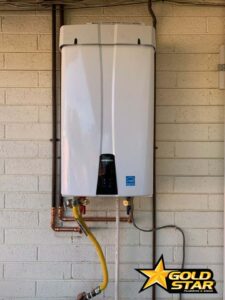
Tankless water heaters are worth it for most households, but only if you go in with a clear picture of what they require and deliver. They’re not perfect for everyone, and the sales pitch you’ll find on manufacturer websites leaves out some important details. Whether your current system is aging out or you’ve already dealt with recurring hot water issues that have already led to water heater repair in Mesa, AZ, the decision to go tankless deserves a closer look than most people give it.
At Gold Star Plumbing & Drain, we’ve seen enough installations, breakdowns, and buyer’s remorse to give you the honest version. Read this before you commit.
Where Tankless Heaters Genuinely Deliver
Tankless units heat water on demand, which means no standby heat loss. A traditional tank loses energy just keeping water warm around the clock, even when nobody’s using it. The U.S. Department of Energy confirms that for homes with average or below-average daily hot water use, tankless heaters can be significantly more energy-efficient than conventional storage tanks.
Beyond efficiency, the lifespan is a genuine differentiator. A well-maintained tankless unit typically lasts 20 or more years, compared to 10 to 15 for a standard tank. That’s real long-term value backed by the technology itself, not just a marketing talking point.
The Drawbacks Nobody Puts in the Brochure
Tankless heaters struggle with simultaneous demand. Running the dishwasher while someone showers can push the unit past its flow rate, leaving you with lukewarm results. Larger households often need multiple units, which compounds the scope of the project considerably.
There’s also the cold water sandwich effect, a brief burst of cold water between hot bursts, that surprises new owners. It’s a quirk of the technology, not a defect, but it’s worth knowing about before installation day.
The Hidden Costs That Catch People Off Guard
This is the part most product pages skip entirely. The unit itself is only one piece of the puzzle. Switching from a tank to a tankless system can require additional work that adds to the project scope, including:
- Gas line upgrades, since tankless units demand significantly higher BTU input than traditional tanks
- New venting configurations that your existing setup may not support
- Electrical panel upgrades for electric models
- Water softener additions, which are especially relevant in hard-water areas like Mesa
Each of these is a prerequisite for safe, code-compliant installation. Skipping them isn’t a shortcut. It’s a liability.
On the maintenance side, annual descaling is necessary in hard-water regions. Mineral buildup quietly reduces efficiency and shortens the unit’s life if it goes unaddressed. That’s an ongoing time and service commitment that tank owners don’t typically deal with at the same frequency.
When something does go wrong, tankless water heater repair involves more sophisticated components than a traditional tank fix. Circuit boards, flow sensors, and heat exchangers require specialized knowledge, and not every plumber is trained to properly diagnose or service them.
When a New Unit Makes More Sense Than Fixing the Old One
If your tankless unit is older, losing efficiency, or generating repeat service calls, repair isn’t always the smartest path forward. Tankless water heater replacement becomes the stronger option when repair costs start climbing relative to what a new unit would run, or when your current model no longer meets your household’s hot water demands.
A good technician will give you a straight answer on which direction makes sense, not just default to the pricier option.
Most Asked Tankless Water Heater Questions
Can I install a tankless heater myself?
Gas line and venting work requires licensed professionals. Improper installation voids most warranties and creates real safety risks.
How does Mesa’s water quality affect my unit?
Mesa’s water is considered moderately hard to hard. Without a softener or regular descaling, mineral buildup can quietly cut efficiency and lifespan over time.
What size unit do I need?
Sizing is based on flow rate and the temperature rise your household requires. A trained plumber should calculate this. Guessing leads to undersized systems and frustrated households.
Does a tankless heater work during a power outage?
Most gas tankless units still require electricity to ignite. No power typically means no hot water, regardless of fuel source.
The Tankless Decision Is Easier With the Right Team Behind It
Gold Star Plumbing & Drain is family-owned, fully licensed and insured, and has earned an A+ rating from the Better Business Bureau, backed by over 1,400 satisfied customers. Our highly trained technicians are available 24/7, offer same-day service options, and work with fair, transparent pricing plus financing options for bigger projects. Our services include warranty coverage.
If you’re thinking about going tankless or dealing with a unit that isn’t performing the way it should, give us a call.






CONTACT US

We're Here When You Need Us
When you need honest answers and prompt, sensible solutions that won't stretch your budget, trust Gold Star Plumbing & Drain. Before any work is done, we'll explain your options, answer your questions, present an accurate estimate, and leave the final call up to you. Contact us today to request service or schedule an appointment.